Description :
(en français et en anglais)
Le nom de l'île, Enez Yar, a parfois été traduit par "Île-à-poule" puis semble avoir été "reconstitué" en breton sous la forme Enez Poull, en y voyant le mot breton poull, soit mare. Il pourrait s'agir ici de l'élément Yar qui désigne en toponymie certains cours d'eau."
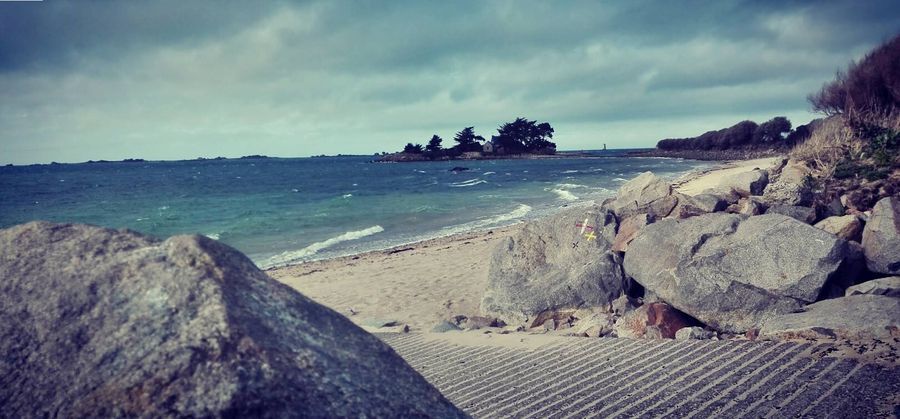
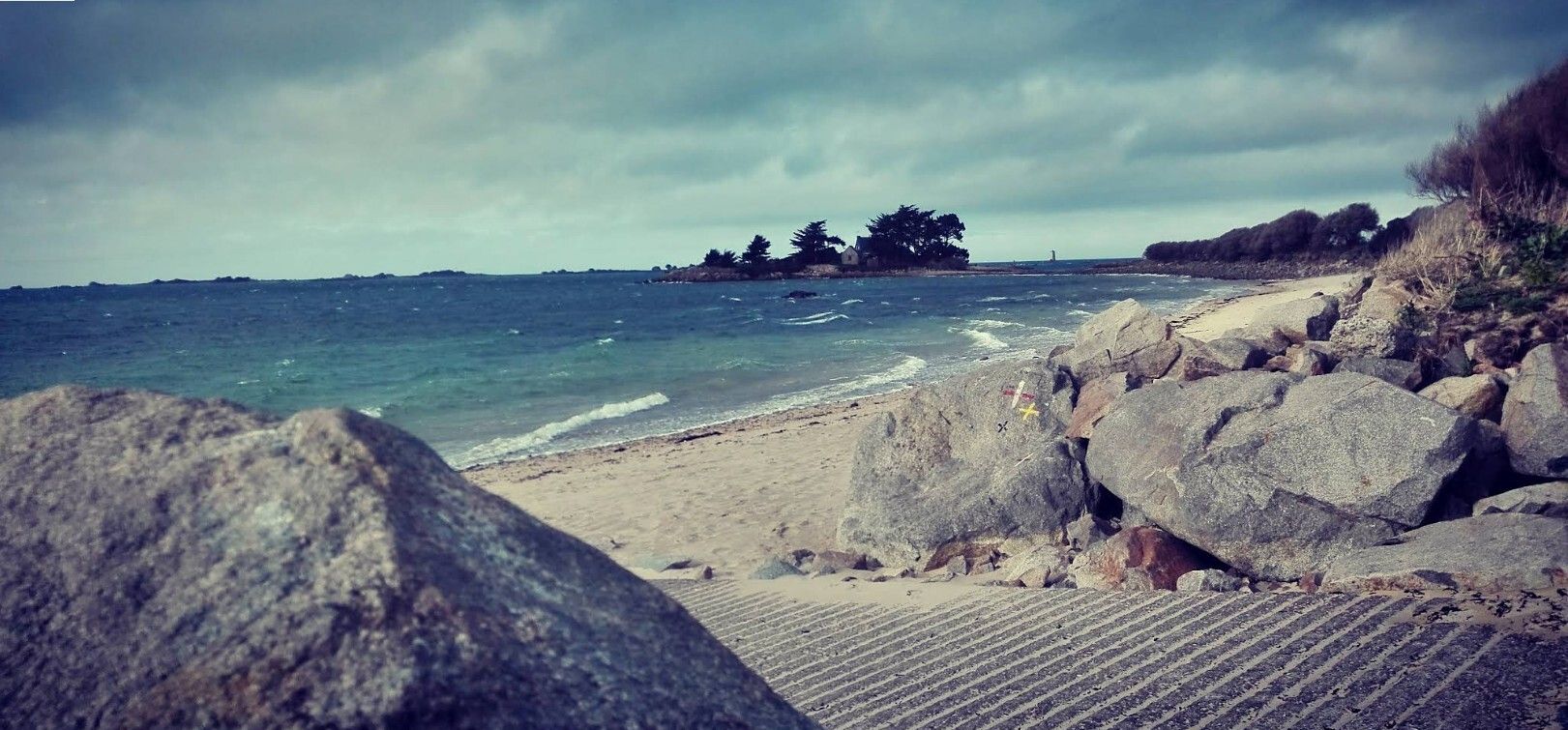
Cette jolie plage de sable fin exposée Ouest offre une très belle vue sur l’estuaire du Jaudy et ses parcs à huîtres à marée basse, le phare de la Corne, Plougrescant, l'Ile Loaven et l’Ile d’Er. L'allée couverte à proximité « Men ar Rompet » témoigne d'une présence humaine depuis le néolithique.
A l'extrémité du tombolo de cailloux d'environ 50 m qui relie Enez Yar à la terre, a été découvert, lors de fouilles réalisées en 1979, un atelier de briquetage de l'âge du fer (-800 à +100 ans en Europe de l'Ouest). Il s'agissait d'un atelier d'exploitation de sel : l'eau de mer collectée dans des godets en argile était chauffée puis, après évaporation, les godets étaient cassés afin de récupérer les galettes de sel.
La plage est un espace vivant où la nature (laisse de mer, oiseaux …), cohabite avec les activités humaines. Il importe d’en prendre soin et de veiller à ne pas dégrader la qualité de l’eau de mer afin que la baignade et l’élevage des huîtres puissent s’y pratiquer.
Ensemble, préservons la plage et les espèces qui y vivent !
__________☀️ 🌊 ________
The island’s name, Enez Yar, has sometimes been translated as “Île-à-poule” and then appears to have been “reconstructed” in Breton as Enez Poull, based on the Breton word poull, meaning “pond.” The element Yar here may refer to certain waterways in toponymy.
This lovely west-facing beach of fine sand offers a stunning view of the Jaudy estuary and its oyster beds at low tide, the Corne Lighthouse, Plougrescant, Île Loaven, and Île d’Er. The nearby covered passageway, “Men ar Rompet,” attests to human presence dating back to the Neolithic period.
At the end of the approximately 50-meter-long pebble tombolo connecting Enez Yar to the mainland, excavations conducted in 1979 uncovered an Iron Age brick-making workshop (dating from -800 to +100 CE in Western Europe). This was a salt-harvesting workshop: seawater collected in clay pots was heated, and after evaporation, the pots were broken to recover the salt cakes.
The beach is a living space where nature (driftwood, birds, etc.) coexists with human activities. It is important to take care of it and ensure that the quality of the seawater is not compromised so that swimming and oyster farming can continue.
Together, let’s preserve the beach and the species that live here!